A narrative topic page compiled from council records, the Arkansas Leader, and the other sources listed at the bottom of the page. Resident discussion from Facebook groups is paraphrased into themes; no posts are quoted.
Growth, Traffic, and the Interchanges
The story
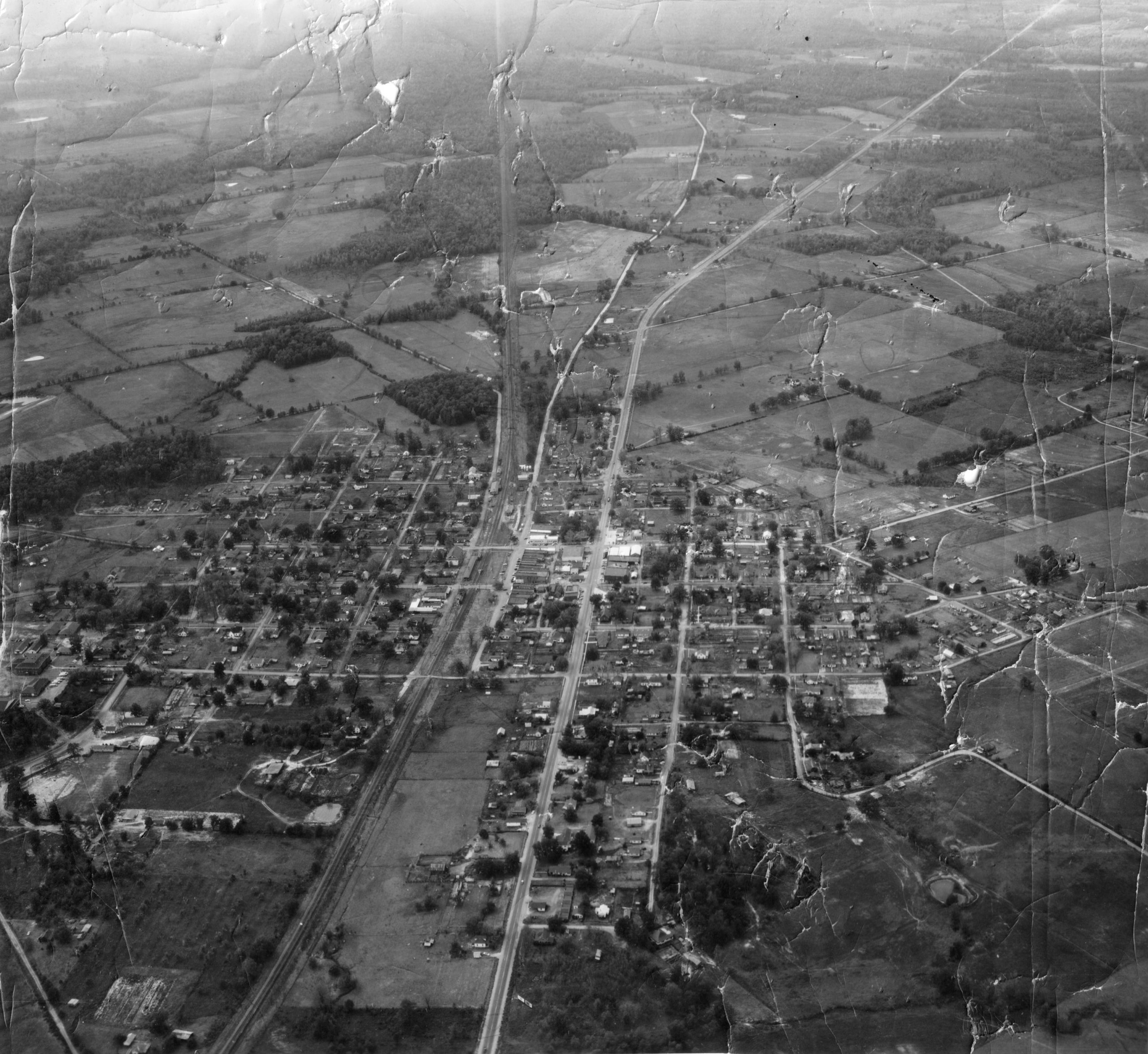
If Cabot has a defining grievance, it is traffic — and traffic in Cabot is really a story about growth arriving faster than the roads underneath it. The city was a railroad water stop that became a Little Rock bedroom community: 1,147 people in 1950, 2,903 in 1970, 9,673 in 1990, then 15,261 in 2000 and 23,776 in 2010, a surge that led BusinessWeek to name Cabot one of Arkansas's boomtowns in 2009. Growth has since slowed to a steadier pace — 26,569 in the 2020 census and an estimated 27,711 by mid-2025 — but the road network residents complain about was largely laid out for the smaller city, and the biggest fixes belong not to City Hall but to the state.
The north interchange (planned ~1999–2019). For roughly twenty years, going back to Mayor Joe Allman's administration, Cabot pushed for a third interchange on the freeway to pull traffic off West Main Street. It opened in March 2019: a $32 million interchange on Hwy. 67/167 north of Cabot connecting Willie Ray Drive and Hwy. 38 — the "North Interchange," Exit 21 in the Leader's later coverage. Cabot contributed $10.1 million from its voter-approved 2013 bond issue; the state built the rest. It was projected to take about 7,000 cars a day off West Main Street (The Leader, March 20 and Dec. 25, 2019).
The widening and the interstate (2020–2026). In 2020 the corridor won $40 million in federal INFRA grant money and a $10 million BUILD award toward widening Hwy. 67/167 from four lanes to six between the Hwy. 5 and Hwy. 89 interchanges — a project the city estimates at $75–100 million, bid in October 2023 and under construction since (City of Cabot, Street and Drainage Projects page). In November 2024, 110 miles of Hwy. 67/167 from North Little Rock to Walnut Ridge were officially designated Interstate 57, and in January 2025 a regional forum in Jacksonville — attended by ARDOT officials — treated the designation as an economic-development event, with boosters reporting a surge of developer interest up and down the corridor (The Leader, Jan. 15 and Jan. 22, 2025). The six-lane widening through Jacksonville is expected to finish in 2027.
The development wave (2023–2026). The growth the interchange was built to serve arrived along the corridors: the Game Time at the Grounds sports complex and Parks & Rec's $21.7 million in bond-funded improvements on the city's 220 acres along Willie Ray Drive; a run of chain restaurants and stores along Willie Ray and Hwy. 5 (the Olive Garden opened in January 2025; the administration's 2026 campaign list adds Chick-fil-A, Whataburger, Slim Chickens, IHOP, hotels and others); the Lyon College campus rising at the north end of the tract; and, in the Facebook groups, a steady stream of real-estate listings marketing raw land at the Exit 21 off-ramp and on Ernie Davis Drive at prices — $2.25 million for roughly 33 acres in one October 2026 listing — that assume the corridor's future (see Sources; group mining below).
The Hwy. 5 interchange rebuild (2026–2028). The current chapter is the southern gate. On May 28, 2026, ARDOT broke ground on rebuilding the Interstate 57/Highway 5 interchange — the complex where Highways 5, 321 and 367 meet the interstate — as a single-point urban interchange (SPUI), a design that runs all turning movements through one signal. The $53.9 million contract went to Weaver-Bailey Contractors of Conway, includes new through lanes and turn lanes on Hwy. 5 and replacement of the bridge over I-57, and is scheduled to finish in mid-2028 (ARDOT, May 20, 2026; Arkansas Money & Politics, June 25, 2026). ARDOT's director put the traffic case plainly at the groundbreaking: Highway 5 north of the interstate is carrying about 18,000 cars a day. The city has also received approval and funding for a SPUI at the Hwy. 89 interchange; the city's project page earlier estimated the two interchange rebuilds together at $100–125 million. Meanwhile ARDOT has a separate Hwy. 5 widening designed south of the interchange (four lanes with a raised median between Hwy. 89 and Greystone Boulevard, with a roundabout at Greystone) and a roundabout under way where Rockwood Drive meets Hwy. 89.
The 2026 campaign frame. Both mayoral candidates made traffic a lead issue, from opposite directions. Mayor Ken Kincade runs on the growth itself: dozens of business openings, a claim at the Oct. 14, 2026 Chamber forum that sales-tax revenue has doubled in eight years, reserves built up, and the 2021 bonds being retired early — growth, in his telling, is what pays Cabot's bills (see the Kincade page). Eddie Joe Williams runs on management: growth without good management, he argues, creates chaos; residents drive to Beebe or Jacksonville to shop to avoid Cabot congestion; and he points to his 2007–2010 road record — the West Main third lane, turn lanes at Campground, Mount Carmel and Kerr Station, the county-partnered West Locust lane, South Rockwood Road (see the Williams page).
What critics said
The criticism lives at two levels: the campaign level above, and the daily level in the Facebook groups, which is where this topic's discourse actually happens. The group conversation is treated here as a primary source — it is the fullest surviving record of how residents themselves frame Cabot's traffic — with themes paraphrased and no posts quoted.
The group discourse: frames
Fresh read-only searches on Oct. 30, 2026 (terms: traffic, interchange, exit 21, construction, roundabout, growth, Willie Ray) across Cabot Strong (~24,000 members), WTF CABOT ARKANSAS (~15,000) and Cabot's Petty Citizens – BCOC (~11,000), on top of this project's October 26 mining file, found roads to be the groups' standing soundtrack — the one civic topic that never fully goes quiet, spiking with every construction milestone and every bad commute. Its recurring frames:
- - The mayor owns it — all of it. The single most-engaged traffic post found was a BCOC post of Aug. 6, 2026 (72 reactions, more than 90 comments) blaming Mayor Kincade personally for interchange spending and cross-town delay, claiming a $69 million interchange and a two-hour cross-town trip. The figure merges the $69 million 2021 bond issue with the road projects — neither the $32 million north interchange the city co-funded nor the $53.9 million state SPUI costs $69 million — but in the discourse the numbers are one big number, and it belongs to the mayor.
- - The pushback is just as local. Commenters on that same thread split three ways: some blamed the mayor; some noted Cabot's road problems predated him by decades; and a substantial bloc defended him in terms like at least he's doing something and things don't happen overnight. Several corrected the premise directly — the interchange project had just started, the funding was federal and state, and an unusually large funeral that day explained part of the backup. The discourse fact-checks itself, unevenly.
- - Growth as a two-sided coin, argued in one thread. The same comment section held both poles of Cabot's growth argument in almost slogan form: towns that don't grow, die — and, aimed at newcomers, the suggestion that if people would quit moving here the traffic would be fine. Newcomer-blame and grow-or-die boosterism are the discourse's twin reflexes — and the appetite is real, not rhetorical: an October 2026 Cabot Strong post asking whether residents wanted a Panda Express in Cabot drew 230 reactions and 161 comments of chain-restaurant wish-listing, among the largest responses to any growth-related post found. The same groups curse the traffic and order the development that causes it, sometimes in the same week. An abstract "growth" debate, by contrast, barely exists — searches for the word itself returned almost nothing civic. Residents argue about concrete things: a light, a lane, a barrel, a ditch.
- - Construction fatigue with gallows humor. The SPUI groundbreaking drew a WTF post the same morning (May 28, 2026) joking that twenty years of construction had led from one mess to another. During the June 2026 traffic shifts, posts turned practical: warnings to avoid the area entirely and route via Hwy. 89 to I-40 or Hwy. 107. A THV11 reporter used Cabot Strong on June 24, 2026 to recruit residents to interview about the Hwy. 5 interchange upgrades — the groups are where TV finds Cabot's voice, which reinforces the cycle.
- - The daily flashpoints are specific, not systemic. A September 2026 Cabot Strong thread (65 reactions, 114 comments) vented about the high-school pickup line and a light that barely lets traffic move; the same month, residents asked what it would take to get more police or sheriff's presence against speeding — dump trucks included — at Magness Creek elementary in the mornings, and a BCOC post that summer warned that a 25-mph residential street was being treated as a drag strip despite repeated complaints to police; an August 2026 thread debated drainage ditches and whether the city was responsible for ruts left by city work; a December 2025 grievance post listed officials' phone numbers and urged residents to call. School-run traffic, drainage, and speeding recur far more than any policy question. The SPUI itself entered the discourse as a traffic story before it was a construction one: a June 2, 2026 WTF post folded ARDOT's just-announced "$54 million" project into a contest over the worst traffic spot in Central Arkansas.
- - Roundabouts are a culture war in miniature. ARDOT's roundabout at Rockwood Drive and Hwy. 89 (announced in a Cabot Strong post, Aug. 31, 2025; 51 comments) and the structure rising at Main and Rockwood (WTF, June 17, 2026 — residents asking what was being built and whether it was even a roundabout) split the groups between residents who see roundabouts as obvious improvements and residents who argue nobody locally knows how to drive one and call them a nightmare. A WTF poll in May 2026 put the question to a vote directly.
- - Skepticism that any of it will work. Doubt that the interchange would relieve traffic appeared in the BCOC thread and in earlier mining — a standing expectation, earned over two decades of projects, that each fix will be overtaken by the next wave of growth.
The arc
Read across 2025–2026, the discourse moves in a cycle the record shows repeatedly: a project is announced (hope and boosterism, plus the joke that it will never finish); construction begins (anger peaks — the anger is about the present commute, aimed at whoever is most visible, usually the mayor); the project opens (the conversation moves to the next bottleneck — a school light, a ditch, a roundabout — within weeks). What the groups almost never do is distinguish whose road it is. That distinction is in the documents, not the discourse.
What the record shows
- - Who controls which roads — the distinction the discourse blurs. Interstate 57 and Highways 5, 38, 89, 321 and 367 are state highways: ARDOT designs, funds and builds on them, including both interchange rebuilds, the six-lane widening, the Hwy. 5 widening and the state-highway roundabouts. The 2019 north interchange was a state project the city helped pay for ($10.1 million from the 2013 bond issue). The city's own levers are its streets and drainage (Willie Ray Drive, Rockwood, Kerr Station and the neighborhood network), its land-use and incentive decisions along the corridors, and its ability to lobby and partner — the city's Street and Drainage Projects page is essentially a catalogue of state projects it has successfully asked for. When a comment thread blames or credits the mayor for the SPUI, it is grading him for an ARDOT project; when it complains about a ditch or a city street, that one is his.
- - The headline figures, checked. The $32 million north interchange (2019) is documented in the Leader, ribbon-cutting included. The $53.9 million SPUI figure is ARDOT's contract award (May 2026). The "$69 million interchange" of group discourse is not any road project — $69 million was the total 2021 bond issue (infrastructure, public safety and parks), most of which was not roads at all. The "revenue has doubled" line is the mayor's forum claim, not independently verified in the sources reviewed. Williams's mayoral-era road projects are his account, printed by the Leader; the West Main third lane and the turn lanes exist, but their attribution to his administration rests on his telling.
- - The growth is real but its pace has changed. The explosive decade was 2000–2010 (+56 percent). Growth since has been steady rather than explosive (+12 percent in the 2010s, about +4 percent 2020–2025 by Census estimate) — yet the experience of growth intensified, because the chain development and the construction all landed on the same two corridors in the same few years. Perception and census are both telling the truth about different things.
- - Traffic counts in the record are thin. ARDOT's roughly 18,000 vehicles a day on Hwy. 5 north of the interstate (June 2026) and the 2019 projection of 7,000 cars a day diverted from West Main are the two hard numbers the sources offer. No source reviewed publishes a current West Main or Willie Ray count against which to test claims — including the claim, heard in the campaign, that South Rockwood is the county's highest-count road. That claim is Williams's, attributed, unverified here.
- - Unknown / gaps: whether the SPUI and widening will hold their mid-2028/2027 dates; what the Hwy. 89 SPUI will finally cost (the $100–125 million combined figure is the city's earlier estimate, not a bid); whether the Hwy. 5 widening south to Greystone proceeds on its designed scope; and how much of the corridor land now listed at speculative prices is actually selling. The discourse will render its verdict on all of it before the documents do.
Connected threads
- - The Lyon College deal — the campus rising at the north end of the same Willie Ray corridor is the growth wave's anchor tenant, and its land deal is the fullest example of how the corridor was assembled.
- - Olive Garden — the corridor's other development fight: a restaurant, a sewer line, and the incentive-transparency dispute that followed the chain-development wave.
- - Criticism of Mayor Kincade — traffic and growth are the resident-level half of the case against the mayor; that page pairs the criticism with his documented answers.
- - What Eddie Joe Williams Is Running On — traffic is Williams's lead issue; his platform page lays out the road record he claims and the chaos argument he runs on.
Sources
- - The Leader: March 20, 2019 (interchange ribbon-cutting; $32 million; Willie Ray–Hwy. 38 connection) and Dec. 25, 2019 (year in review: city contributed $10.1M from the 2013 bond issue; ~7,000 cars/day off West Main; plans dating to the Allman administration) — corpus
leader-2019/. Exit 21 references, corpusleader-2021/2021-12-08.txt,leader-2022/2022-06-29.txt,leader-2023/2023-09-13.txt. - - The Leader: Jan. 15 and Jan. 22, 2025 — I-57 designation (November 2024), the Jacksonville regional forum, and corridor development interest: corpus
leader-2025/. - - The Leader: Oct. 14, 2026 — Chamber candidate forum (Kincade's revenue and growth answers; Williams's traffic points): corpus
leader-2026/browser-download-20261026T182349.950086698Z-70-.txt; Aug. 12, 2026 — "Kincade campaigns on dozens of new businesses": corpusleader-2026/browser-download-20261026T183522.981419349Z-79-.txt. - - ARDOT news release NR 26-062, May 20, 2026 — Hwy. 5/I-57 SPUI groundbreaking, $53.9M Weaver-Bailey contract, mid-2028 completion: https://ardot.gov/news/26-062/
- - Arkansas Money & Politics, "Reimagining of Cabot Interchange Set to Ease Traffic Concerns on Arkansas 5," June 25, 2026 — SPUI design and the ~18,000-vehicles-a-day figure for Hwy. 5 north of the interstate: https://armoneyandpolitics.com/cabot-interchange-ease-traffic/
- - City of Cabot, "Street and Drainage Projects" — Hwy. 67/167 widening ($75–100M, bid Oct. 2023), the 2020 federal grants, and the Hwy. 5/Hwy. 89 SPUI program (earlier combined estimate $100–125M): https://www.CabotAR.gov/385/Street-and-Drainage-Projects
- - U.S. Census Bureau QuickFacts, Cabot city, Arkansas — 23,776 (2010), 26,569 (2020), 27,711 (July 1, 2025 estimate); Encyclopedia of Arkansas, "Cabot (Lonoke County)" — historical population and the 2009 BusinessWeek boomtown designation.
- - Facebook group searches (Oct. 30, 2026, read-only; themes paraphrased, no posts quoted, no individuals named): Cabot Strong, WTF CABOT ARKANSAS, Cabot's Petty Citizens – BCOC — queries "traffic," "interchange," "exit 21," "construction," "roundabout," "growth," "Willie Ray," including a bounded read of comments on the Aug. 6, 2026 BCOC interchange thread and the May 28, 2026 WTF groundbreaking post. See also corpus
facebook-mining.md(Oct. 26, 2026).